
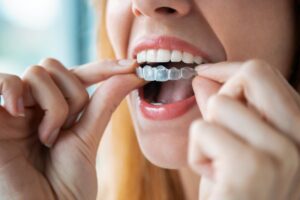
Invisalign is a popular orthodontic treatment that uses clear, removable aligners to straighten teeth discreetly and comfortably. Because the aligners can be removed for eating and brushing, many patients assume their risk of cavities decreases during treatment. While Invisalign can make oral hygiene easier than traditional braces, it’s still possible to develop cavities if proper care isn’t maintained.
Here’s what you need to know about protecting your teeth during Invisalign treatment.
Yes, Cavities Can Still Happen
Invisalign aligners move teeth, but they don’t protect against tooth decay. Cavities develop when bacteria in the mouth feed on sugars and produce acids that attack tooth enamel.
If food particles and plaque are allowed to remain on your teeth, decay can still occur whether you’re wearing aligners or not.
The good news is that Invisalign’s removable design makes it easier to keep your teeth clean compared to traditional braces, which can trap food around brackets and wires.
How Invisalign Can Increase Cavity Risk
Although Invisalign itself doesn’t cause cavities, certain habits during treatment can increase your risk.
One common mistake is putting aligners back in immediately after eating without brushing your teeth. When food particles and sugars remain on your teeth, the aligners can trap them against the enamel for hours at a time.
This creates an environment where cavity-causing bacteria can thrive.
Another issue is drinking sugary beverages while wearing aligners. Soft drinks, sports drinks, sweetened coffee, and juice can become trapped inside the aligners and remain in contact with your teeth longer than normal.
How to Prevent Cavities During Treatment
The best way to protect your smile is to maintain excellent oral hygiene throughout your Invisalign journey.
Helpful habits include:
- Brushing after every meal whenever possible.
- Flossing daily.
- Rinsing your mouth before reinserting aligners.
- Cleaning your aligners regularly.
- Drinking only water while wearing aligners.
- Attending regular dental checkups and cleanings.
If you can’t brush immediately after eating, rinse your mouth thoroughly with water before putting your aligners back in.
Invisalign May Actually Help Oral Health
For many patients, Invisalign can ultimately improve oral health. As teeth become straighter, they are often easier to brush and floss effectively. This can reduce plaque buildup and make long-term cavity prevention easier after treatment is complete.
Of course, these benefits depend on maintaining good oral hygiene habits throughout the process.
While cavities can develop during Invisalign treatment, they are largely preventable with proper care. Brushing, flossing, cleaning your aligners, and following your dentist’s instructions can help keep your teeth healthy while your smile transforms.
About the Author
Dr. Jasmine King has been practicing dentistry for 2 full decades. She is a graduate of the University of Tennessee College of Dentistry and takes many hours of continuing education each year to stay current with the latest techniques and developments in her field. Dr. King also stays current through memberships in the American Dental Association, the Texas Dental Association, and the Fort Worth District Dental Society. If you’re interested in Invisalign treatment, book online with us or call our Fort Worth office at (817) 292-7488.