
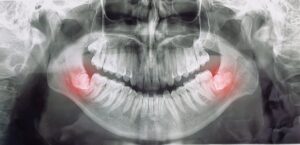
Wisdom teeth are the last set of molars to develop, typically emerging between the ages of 17 and 25. While some people have enough room for these teeth to erupt normally, many do not. When a wisdom tooth becomes trapped beneath the gums or grows at an improper angle, it is considered impacted. Impacted wisdom teeth can lead to pain, infection, damage to neighboring teeth, and other oral health problems if left untreated.
Here are 3 common warning signs that your wisdom teeth may be impacted.
1. Pain or Swelling at the Back of Your Mouth
One of the earliest and most noticeable signs of impacted wisdom teeth is discomfort near the back of the jaw. You may experience a dull ache that comes and goes or persistent pain that worsens when chewing.
Swollen, tender gums behind your last molars are also common. In some cases, the tissue around a partially erupted wisdom tooth becomes inflamed or infected, a condition known as pericoronitis. This can make brushing and eating uncomfortable and may cause redness, swelling, or a bad taste in your mouth.
If pain or swelling lasts more than a few days, it’s important to schedule a dental evaluation.
2. Difficulty Opening Your Mouth or Jaw Stiffness
As impacted wisdom teeth place pressure on the surrounding tissues, they can cause inflammation that extends into the jaw muscles. This may make it difficult to fully open your mouth or chew comfortably.
Some patients also notice tenderness near the jaw joint or pain that radiates into the ear or side of the face. Although these symptoms can have several causes, impacted wisdom teeth are a common contributor, especially in young adults.
Your dentist can take X-rays to determine whether your wisdom teeth are responsible for the discomfort.
3. Crowding or Damage to Nearby Teeth
When there isn’t enough room for wisdom teeth to erupt, they may push against the neighboring molars. This pressure can increase the risk of damage to adjacent teeth and make those areas harder to clean.
Food particles and bacteria often become trapped around partially erupted wisdom teeth, increasing the likelihood of cavities and gum disease. While wisdom teeth don’t always cause noticeable shifting of the front teeth, they can still create problems for the teeth immediately next to them.
Regular dental exams allow your dentist to monitor the position of your wisdom teeth and recommend treatment before complications develop.
Not all impacted wisdom teeth cause symptoms right away, which is why routine dental checkups and X-rays are so important. Your dentist can identify impacted teeth before they lead to pain or infection and determine whether removal is the best course of action. If you’re experiencing jaw pain, swollen gums, or discomfort near the back of your mouth, don’t wait for the problem to worsen.
About the Author
Dr. Jasmine King has been practicing dentistry for 20 years. She earned her Doctor of Dental Surgery degree from the University of Tennessee College of Dentistry and regularly takes numerous hours of continuing education each year to expand her skill set and remain current with the latest developments and techniques in her field. Dr. King is also a member of the American Dental Association, the Texas Dental Association, and the Fort Worth District Dental Society. If it’s time for your wisdom teeth to be removed, book your appointment online or call our Fort Worth office at (817) 292-7488.